Data centers as a threat? People in USA reject them in referendums; protests in Europe.
The boom in data centers, driven by the development of artificial intelligence, is encountering resistance from local residents. In the US, citizens have voted on the future of these facilities in dozens of local referendums. Protests are also spreading across Europe, even as China aggressively builds out its own digital infrastructure. Who is actually behind this construction, and why are people in some places so vehemently opposed to it?
Data centers have become one of the fastest-growing segments of global technology infrastructure. Without them, cloud services, internet platforms, large-scale databases, and artificial intelligence systems could not function. In recent years, however, their construction has become a politically sensitive issue.
While technology companies and governments describe them as the strategic infrastructure of the future, some residents are concerned about rising electricity and water consumption, noise, environmental impact, and the potential for higher energy costs. In some American towns, this opposition has already led to votes on banning or restricting their construction—and this trend is not limited to the United States.
Americans Vote Against Data Centers
Recent local ballot initiatives in the US have sent a particularly strong signal. Across ten states, voters considered 41 measures related to data centers. The outcome was highly unfavorable for proponents: in 40 instances, voters supported restrictions on construction or rejected proposals intended to facilitate such development.
Moreover, these were not all of the same type of vote. In some towns, voters decided on a total ban on data centers; in others, they opted to ban only large-scale facilities, impose a temporary moratorium on construction, amend zoning plans, or require that projects be approved by local residents.
For instance, in Alhambra, California, approximately 83 percent of voters supported a ban on data centers. In Edgewater, Florida, a ban on the development, expansion, and operation of new data centers garnered support from roughly 77 percent of voters. In Ohio, residents rejected large-scale data centers, with the town of Piqua voting to ban facilities with a power capacity exceeding 25 megawatts.
Elsewhere, the votes concerned less categorical measures. In Janesville, Wisconsin, voters backed a requirement that projects exceeding a certain investment value must be approved by the citizens themselves. In some Illinois municipalities, the votes were merely advisory—gauging public opinion without constituting a legally binding ban.
Consequently, not every vote resulted in the cancellation of a specific project. However, the outcomes demonstrated that residents in many locations reject the current pace and conditions under which data infrastructure is being developed. In total, 27 measures restricting construction were approved, while 13 other proposals—those favoring the development of data centers—were rejected by voters.
This resistance in the United States is not merely the result of a fleeting electoral mood. Some municipalities had already enacted moratoria—temporary suspensions on the permitting of new projects. In other instances, construction was successfully blocked or delayed following protests by residents and political disputes.
What Is a Data Center?
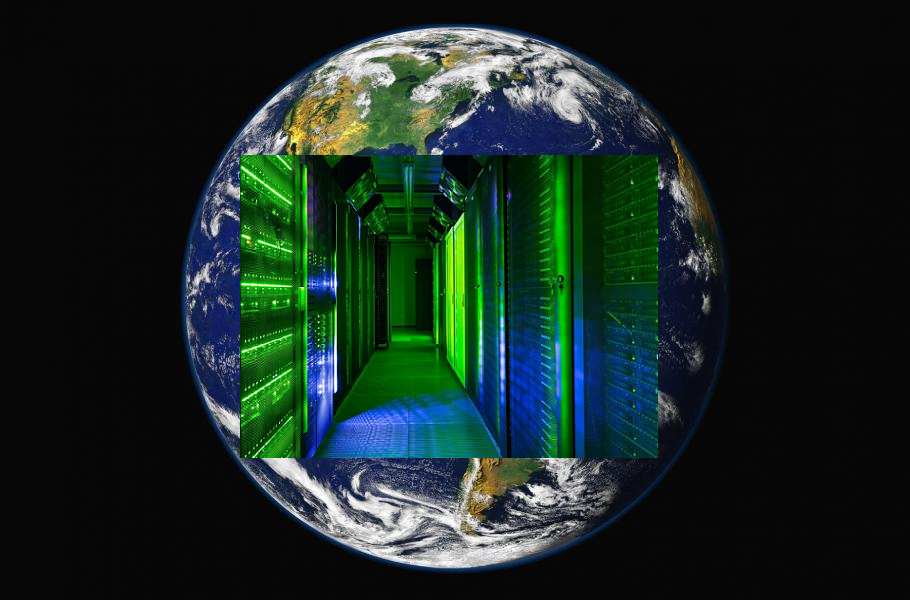
In simple terms, a data center can be envisioned as a vast „computer factory.“ However, it is more than just a large building filled with servers; it is a technological facility designed to continuously process, store, and transmit massive volumes of digital information.
At its core are server rooms housing thousands—or even tens of thousands—of computer servers, data storage units, and networking equipment. These servers perform calculations, store data, and power applications, cloud services, and artificial intelligence systems.
This requires an extensive technical infrastructure:
• Electrical infrastructure: transformers, substations, backup power systems, and uninterruptible power supplies (UPS).
• Cooling systems: fans, air conditioning units, cooling towers, and—in modern facilities—liquid cooling solutions.
• Backup generators: typically diesel-powered, designed to maintain operations during power outages.
• Security systems: physical site protection, fire suppression systems, and access control.
• Data connectivity: fiber-optic cables and network infrastructure that enable communication with other centers and users worldwide.
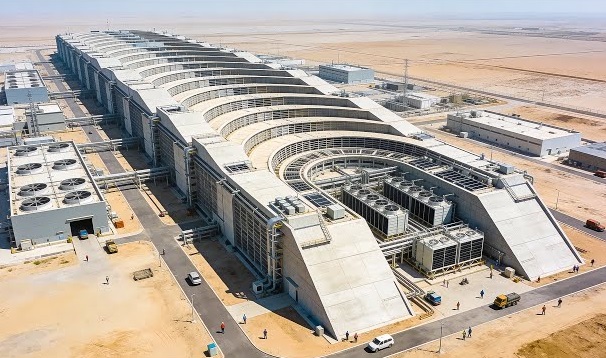
Data centers must operate continuously, often subject to extremely high availability requirements. An outage can disrupt the operations of banks, online retailers, cloud services, and other systems upon which millions of users rely.
Furthermore, their size can vary significantly. A smaller enterprise data center may serve a single company, whereas so-called hyperscale centers are massive facilities designed for global technology platforms. A distinct category consists of new centers for artificial intelligence, which require exceptionally powerful chips and very intensive cooling.
Why People Protest Against Data Centers
The biggest issue is electricity consumption. Data centers require energy not only for the servers themselves but also for cooling, power supply systems, and other technical equipment. Furthermore, this consumption is not evenly distributed.
Large facilities tend to cluster in specific areas, where they can account for a significant portion of local electricity demand.
According to the International Energy Agency (IEA), data centers consumed approximately 415 terawatt-hours (TWh) of electricity globally in 2024—roughly 1.5 percent of total global consumption. Under the agency’s baseline scenario, this figure could rise to approximately 945 TWh by 2030—more than double the current level.
Another critical question is who will pay for the necessary upgrades to the electrical grid. New facilities require high-capacity grid connections, substations, and, at times, substantial investments in transmission infrastructure. If these costs are not distributed fairly between the investor and other consumers, they can become a source of contention regarding electricity pricing.
Water is another concern. Some cooling methods consume water directly on-site, while others rely primarily on closed-loop or air-based systems. Consequently, water usage varies significantly from one data center to another. In regions grappling with drought or water scarcity, even a relatively large volume of water withdrawal can become a point of conflict.
Residents are also troubled by the constant noise from cooling systems and fans, traffic during both construction and operation, and emissions from backup diesel generators. While these are primarily used during testing or power outages, their operation can still have a localized impact on air quality.
Some criticism also concerns the economic benefits. Although construction can generate hundreds or even thousands of jobs, the number of permanent staff once the facility is complete tends to be relatively low compared to a traditional industrial plant. Consequently, municipalities often question whether the projected tax revenue and investments justify the demands placed on land, energy, and public infrastructure.
However, this does not mean that every data center poses an environmental or economic threat. Modern cooling technologies, the use of renewable energy sources, and careful site selection can significantly mitigate these impacts. Everything depends on the specific project—its scale, location, and the conditions under which it is granted a permit.

Europe: Fewer referendums, but opposition is growing
Europe has not yet seen a wave of local referendums on the scale of those in the United States. This certainly does not mean, however, that data centers are being established here without resistance from local residents.
On November 6 and 7, 2026, protests took place in approximately 15 European countries against the rapid expansion of energy-intensive data centers. According to the organizers, more than one hundred civic and environmental organizations took part in the campaign. Protests have taken place in countries including Ireland, Poland, Denmark, Finland, Spain, the Netherlands, France, and Great Britain.
In some locations, opposition has escalated into conflicts surrounding construction. Demonstrators have raised concerns regarding electricity and water consumption, the impact on the surrounding landscape, noise levels, and a lack of involvement for local residents in the decision-making process.
In the Netherlands, activists even briefly halted work at a Microsoft data center construction site near Amsterdam.
Meanwhile, European governments generally view the construction of data centers as a strategic investment. The European Union aims to bolster its own computing capacity and reduce its reliance on the technological infrastructure of American and Chinese companies. This creates a clash between the strategic interests of states and the concerns of local residents.
Furthermore, Europe is grappling with a shortage of suitable sites and electrical grid capacity. Consequently, investors are increasingly looking for land outside traditional hubs, where they can secure more affordable energy and the space required for large-scale facilities.
China: State-Supported Strategic Infrastructure
China pursues a markedly different approach to data centers, viewing their construction as an integral part of a long-term strategy to develop its digital economy and artificial intelligence.
A notable initiative is the „East Data, West Computing“ program, which seeks to shift a portion of computing capacity from densely populated, economically advanced eastern regions to western provinces that offer greater space and energy resources.
The objective is to integrate these individual centers into an extensive national computing infrastructure. According to China’s Ministry of Industry and Information Technology, the three largest telecommunications companies were providing 938,000 data center racks—that is, server cabinets—to customers by the end of 2025.
A year earlier, China’s National Data Administration reported that the total number of racks in use across the country had exceeded 2.11 million. These statistics are defined differently, however, and do not represent a direct comparison of the same category of equipment.
Consequently, China is building not only data centers for standard internet and cloud services but also an extensive infrastructure for the computing power required to develop artificial intelligence. State support, industrial policy, and coordinated planning allow the country to pursue a different approach than that seen in many Western nations.
However, this does not automatically mean that development in China will be free from conflicts related to energy, the environment, or local communities. Crucial factors will include where these centers are built, what energy sources they utilize, and whether their capacity aligns with actual demand.
How large is data infrastructure today?
When comparing the United States, China, and Europe, it is necessary to distinguish between two metrics: installed computing capacity and actual electricity consumption. Capacity is typically expressed in megawatts or gigawatts, while electricity consumption is measured in megawatt-hours or terawatt-hours. These are not interchangeable units.
According to the IEA, in 2024, the United States accounted for approximately 45 percent of global electricity consumption by data centers, followed by China with 25 percent and Europe with 15 percent. The remaining 15 percent was attributed to the rest of the world.
In the United States, the Lawrence Berkeley National Laboratory estimated that data center electricity consumption in 2024 reached 192 TWh, representing 4.7 percent of total U.S. electricity consumption. A new study also points to the potential for further significant growth; under a baseline scenario, consumption could reach 11.8 percent of U.S. electricity usage by 2030.
In China, the specialized industry report *DC Market Insights* estimates the installed data capacity at the end of 2025 to be 30.9 GW. This figure represents an estimate of IT power load rather than an official aggregate statistic from the Chinese government.
Compared to the USA, the European Union has a smaller data infrastructure. According to European Commission data, the EU accounted for approximately 20 percent of the world’s installed capacity in 2025, while the United States accounted for 42 percent. Furthermore, European capacity is concentrated in a few countries—primarily Ireland, the Netherlands, Denmark, Sweden, Finland, and Germany.
Who Profits from Data Centers?
The construction of data centers is not driven solely by newly established technology companies. Three main groups of players operate in the market: global IT giants, specialized operators, and newer firms focused on infrastructure for artificial intelligence.
Among the largest technology investors are the American companies Amazon, Microsoft, Google, and Meta. They build their own data centers to support cloud services, internet platforms, and artificial intelligence. Their infrastructure serves as a strategic foundation for the further development of their businesses.
Alongside them are specialized operators. The American company Equinix is one of the world’s largest providers of data centers and network interconnection. Digital Realty owns, develops, and operates an extensive portfolio of data centers in the USA, Europe, and other regions. The Japanese group NTT is a major global player in the field of data infrastructure.
A European example is the French company DATA4, which handles the financing, design, construction, and operation of its own data centers. It operates in countries including France, Italy, Spain, Poland, and Germany.
In Asia, major players include China’s GDS Holdings—an independent data center operator—and Alibaba Cloud, the cloud division of the Alibaba Group. The Australian company AirTrunk specializes in large hyperscale data centers within the Asia-Pacific region.
Younger companies focused on AI infrastructure are also growing rapidly. The American firm CoreWeave provides cloud computing capacity specialized for artificial intelligence, while the British company Nscale builds and connects infrastructure for AI computing in Europe and other regions.
When evaluating specific projects, it is important to distinguish between the investor, the developer, the entity physically constructing the facility, and the operator. These roles are not necessarily filled by a single company. A well-known technology firm might be the primary client of a data center, even though the land is owned and the facility is operated by a different business.
Data centers thus represent not only a technological domain but also an increasingly significant investment sector. Capital from major tech companies, specialized developers, and investment funds is flowing into their construction. The question remains whether future demand for computing capacity will grow rapidly enough to justify all the planned investments.
One thing is certain: data centers are no longer merely inconspicuous buildings located on the outskirts of cities. They are becoming a vital component of the energy sector, industry, and geopolitical competition. Furthermore, their future development will increasingly depend not only on technology firms and governments but also on their acceptance by the people living in their vicinity.