High electricity costs are weakening European industry. The European Union is losing its price advantage relative to the US and China.
European industrial enterprises pay significantly more for electricity than their competitors in the United States and China. This energy-related price disadvantage has become a major factor affecting the global competitiveness of European manufacturing. Furthermore, disparities exist even within the European Union itself; Germany and France serve as two distinct examples.
The price of electricity is an increasingly significant factor influencing the standing of industrial firms in global markets. For manufacturers of steel, chemicals, fertilizers, glass, paper, and other energy-intensive products, electricity costs are far from a marginal operational expense. They can determine the economic viability of production, the location of new factories, and a company’s ability to maintain competitive pricing for its goods.
It is in this regard that the European Union finds itself in an increasingly difficult position. International comparisons show that European industry pays substantially more for electricity than industrial producers in the United States—and more than their competitors in China as well.
This is not merely a short-term consequence of the energy crisis. The price gap existed well before 2022, and Europe has failed to eliminate it following the sharp price surges experienced during the crisis period. European Industry Pays More Than Double the US Price for Electricity
According to data from the European Union Agency for the Cooperation of Energy Regulators (ACER), the average nominal final price of electricity for industrial consumers in the European Union in 2025 was approximately 151 euros per megawatt-hour. In the United States, the price was approximately 74 euros/MWh that same year.
Consequently, the European price was more than double the US price.

This disparity is also confirmed by the International Energy Agency (IEA). Its analysis indicates that in 2025, electricity prices for energy-intensive industries in the European Union remained, on average, more than twice as high as those in the United States and nearly 50 percent higher than in China.
This represents a significant competitive gap. An American or Chinese manufacturer that consumes large quantities of electricity may enjoy a more favorable starting position than a European competitor, thanks to lower energy costs. This is particularly true for sectors where electricity accounts for a substantial portion of total production costs.
Naturally, this difference does not mean that every American or Chinese enterprise purchases electricity at the exact same price. Costs vary based on region, type of production, volume of consumption, contractual terms, and other factors. Nevertheless, international statistics reveal a clear overall trend: European industry faces a heavier price burden. The energy crisis has further widened the gap between Europe and America.
Developments over the last decade show that the price disadvantage faced by European industry is not a new phenomenon. However, the energy crisis that began after 2021 has significantly exacerbated it.
According to ACER data, the average nominal final electricity price for industrial consumers in the European Union was approximately 96 EUR/MWh in 2019. In the United States, it was 61 EUR/MWh. Thus, Europe was already paying more back then, though the gap was not as pronounced as it would become in subsequent years.
In 2022, the European price climbed to approximately 215 EUR/MWh. In the same year, the price in the United States rose to 79 EUR/MWh. A decline followed, but there was no return to pre-crisis conditions.
In 2025, the industrial electricity price in Europe stood at approximately 151 EUR/MWh, while in the United States, it reached 74 EUR/MWh.
| Year | EU | USA |
|---|---|---|
| 2019 | 96 €/MWh | 61 €/MWh |
| 2022 | 215 €/MWh | 79 €/MWh |
| 2025 | 151 €/MWh | 74 €/MWh |
Average nominal final electricity prices for industrial consumers. Rounded figures based on ACER data.
While the price in the US returned to a level relatively close to its pre-crisis state following the crisis period, the price in Europe remained significantly higher. This poses a major challenge for European manufacturers: their US-based competitors have not merely gained a short-term advantage but benefit from more favorable energy conditions in the long term.
Germany and France: Two Different European Stories
However, the European Union is not a unified market when it comes to electricity prices. There are substantial disparities between individual member states, well illustrated by the EU’s two largest economies—Germany and France.
According to Eurostat data for the first half of 2026, large industrial consumers in Germany with an annual electricity consumption of between 70 and 150 GWh paid an average of approximately 138 EUR/MWh. In France, the figure was only 79 EUR/MWh.
Consequently, the price in Germany was roughly three-quarters higher than in France.
For a company with an annual consumption of 100 GWh, the price differential would amount to approximately 5.9 million EUR per year. Such a sum can significantly impact production costs, investment decisions, and the siting of new production capacity.
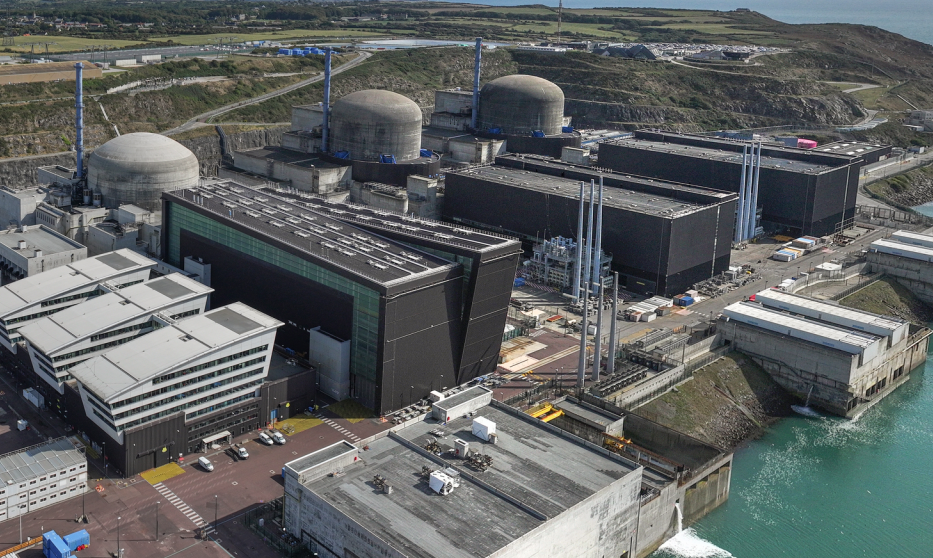
In this regard, France starts from a different position. A significant portion of its electricity is generated by nuclear power plants, which can contribute to more stable and relatively favorable price conditions. However, the energy mix alone does not account for all the differences. Other factors also play a role, including market mechanisms, regulations, grid costs, taxes, and specific contractual terms.
Germany, for instance, is undergoing a challenging energy transition. Its industrial sector must operate in an environment shaped by a combination of factors: the costs of transforming the energy system, the need for a stable power supply, and price dynamics driven by the European electricity market.
A comparison between the two countries reveals that the price issue in Europe cannot be attributed to a single factor. Likewise, it cannot be assumed that all industrial enterprises across Europe face identical conditions.
Why is electricity more expensive in Europe?
The price gap between Europe and its competitors is not caused by any single factor. The final price of electricity is composed of several elements: the cost of the commodity itself, transmission and distribution costs, taxes, and various other charges. The energy mix, the availability of domestic resources, reliance on imports, and state support also play significant roles.
One contributing factor is the EU Emissions Trading System (EU ETS). Electricity producers that rely on fossil fuels must account for the cost of carbon dioxide emissions. These costs can be reflected in wholesale electricity prices, which in turn affect the prices paid by industrial consumers.
Natural gas also exerts a significant influence. Within the European energy system, gas-fired power plants often determine the price of electricity on the wholesale market—particularly during periods when their output is required to meet demand. Consequently, higher gas prices can also feed through into electricity prices.
The United States, by contrast, enjoys a significant advantage in the availability of domestic energy resources—natural gas, in particular. Extensive domestic extraction, robust infrastructure, and a different electricity generation mix create conditions that are more favorable for many American industrial consumers.
China, for its part, operates under a different energy and market model, in which state regulation, regional pricing mechanisms, and the structure of electricity generation play a major role. Published industrial tariffs can vary significantly depending on the province, voltage level, and type of consumer.
It would therefore be inaccurate to attribute Europe’s price disadvantage solely to emission allowances, European regulations, or the energy transition. Rather, it is the result of a combination of factors, including fuel prices, resource availability, the generation mix, grid investments, and the specific operational dynamics of individual markets.
The Competitiveness of European Industry Under Pressure
High electricity prices pose a long-term competitive risk to European industry. If a European company has to pay significantly more for the same energy than a competitor in the US or China, it enters the international marketplace burdened by higher production costs.
This does not automatically mean that European manufacturing must lose its competitiveness. Other factors—such as productivity, technology, product quality, labor availability, logistics, and various other cost components—also play a decisive role. However, in energy-intensive sectors, the disparity in electricity prices can be so substantial that it outweighs other advantages European manufacturers might otherwise possess. Moreover, the issue is not limited to current operating costs. Energy intensity and projected future electricity prices also influence investment decisions. When selecting a location for new production facilities, companies consider not only the availability of labor, infrastructure, and market access, but also the long-term cost of energy in a given country.
The European Union therefore faces a critical question: how to carry out an energy transition and ensure secure supplies while simultaneously keeping industrial production competitive against economies that enjoy more favorable energy conditions.
A comparison with the USA and China reveals that this is not merely a short-term price fluctuation. The price gap persists even after the worst of the energy crisis has subsided. Consequently, it will be crucial for European industry whether conditions can be established in which affordable electricity, supply stability, and competitive production costs become genuine priorities of European economic policy.
For the specific European examples, the category of large consumers (70–150 GWh per year) as reported by Eurostat for the first half of 2026 was used: €138/MWh for Germany and €79/MWh for France. While these two figures are comparable to each other, they do not represent the exact same category as the EU-wide average calculated by ACER or the data used in the IEA’s international comparisons.