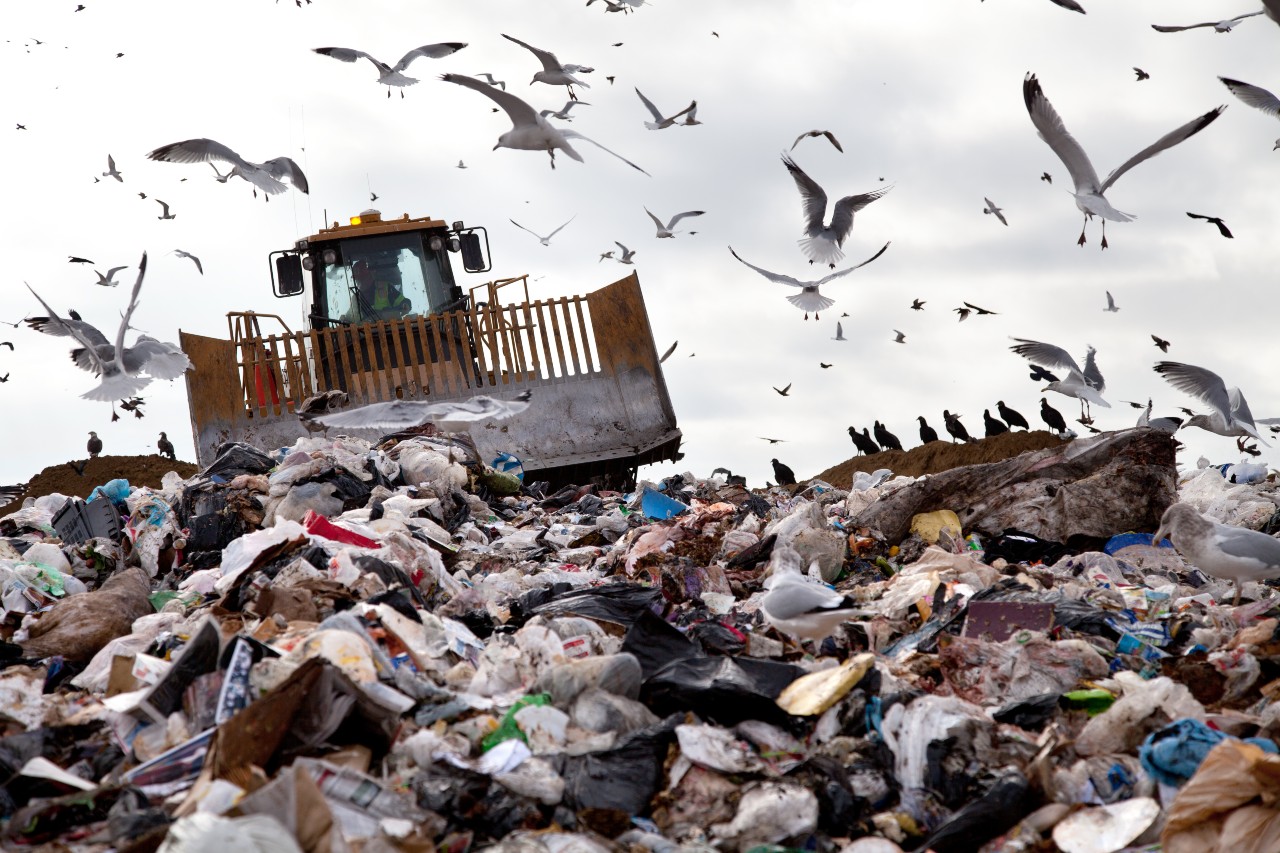
Corporate insolvencies are on the rise globally. Bankruptcies are affecting even well-known, large-scale companies. (Illustrative Photo).
Corporate insolvencies are increasing worldwide. Financial difficulties are not sparing even major corporations—companies that, until recently, were significant players in the global economy. Some have ceased to exist, while others have been saved through reorganization or the sale of parts of their business.
Current forecasts suggest that this year could set further grim records. In Germany alone, approximately 25,900 corporate insolvencies are expected—an eight percent year-on-year increase and the highest figure since 2013. In France, the number of corporate insolvencies could reach approximately 71,000, marking a new all-time high.
According to a recent analysis by Allianz Trade, the number of corporate insolvencies globally is projected to rise by another five percent by 2026. Notably, in the first three quarters of this year alone, 376 large companies—each with annual revenues exceeding 50 million euros—have fallen into insolvency. This sets a new record.
Furthermore, analysts estimate that approximately 2.7 million jobs worldwide will be directly at risk due to insolvencies in 2026 and 2027.
In short, this is not limited to small enterprises or local firms. Financial distress, insolvency, and bankruptcy are affecting even major corporations—companies that, until recently, were key players in the global economy. Some of these have already ceased to exist, while others were saved by creditors or new owners. For still others, it remains to be seen whether they can overcome their serious financial difficulties.
When even a large, well-known company collapses
Examples from the last fifteen years show that a collapse is not necessarily caused solely by an economic recession or a sudden drop in demand. Sometimes, it stems from a combination of high debt, poor management, a loss of investor confidence, technological shifts, or an underestimation of the competition.

MF Global (USA, 2011)
The American financial firm MF Global was a major trader in financial derivatives. Its problems intensified after it made significant investments in European sovereign bonds during the Eurozone debt crisis. Growing concerns regarding its financial stability led to an exodus of clients and a liquidity crunch. In October 2011, the company filed for bankruptcy protection under U.S. law. Its collapse ranked among the largest failures of an American financial institution at that time.
Kodak (USA, 2012)
The story of Kodak illustrates how technological change can threaten even a long-standing industry leader. For decades, the company was a global icon of the photography industry; however, it failed to adapt its traditional film-based business in time for the rise of digital photography. In January 2012, it filed for bankruptcy protection. Following a reorganization, however, the company resumed operations in 2013. Thus, Kodak did not cease to exist, but it never regained its former standing in the photography industry.
Hanjin Shipping (South Korea, 2016–2017)
South Korea’s Hanjin Shipping was one of the world’s largest container shipping lines. Its financial troubles led to insolvency proceedings and the cessation of operations in 2016. Ships carrying cargo valued at billions of dollars were left stranded in ports around the world. In February 2017, the company entered final liquidation. Its collapse demonstrated the severe consequences that the bankruptcy of a major carrier can have on international trade and supply chains.
Carillion (Great Britain, 2018)
The British construction and services group Carillion held extensive contracts, including major agreements with the public sector. Nevertheless, it fell into serious financial distress. Key factors included high levels of debt, problematic contracts, insufficient cash generation, and the payment of dividends that did not reflect the company’s true financial position. In January 2018, the firm entered compulsory liquidation. Its collapse jeopardized tens of thousands of jobs and also impacted numerous suppliers and subcontractors.
Thomas Cook (Great Britain, 2019)
One of the world’s best-known travel agencies—with a history dating back to the 19th century—could not survive a combination of high debt, intense competition from online travel portals, shifts in consumer behavior, and financing difficulties. It entered liquidation in September 2019. The collapse had immediate consequences for travelers: approximately 150,000 British tourists found themselves abroad without a way to return home. Thousands of employees lost their jobs.
Wirecard (Germany, 2020)
Until shortly before its collapse, the German payment and technology company Wirecard was considered one of the brightest prospects in the European fintech sector. In 2020, however, it was revealed that approximately 1.9 billion euros—supposedly held in bank accounts—were missing from the company’s accounts. The funds could not be accounted for, and the company became insolvent. Insolvency proceedings followed, leading to the firm’s collapse. This case became one of the largest accounting scandals in modern German corporate history.
Hertz (USA, 2020)
The American car rental company Hertz was one of the world’s most recognizable brands in the vehicle rental sector. The COVID-19 pandemic severely curtailed travel and demand for its services. The company was also burdened by high levels of debt and the costs associated with maintaining a vast fleet of vehicles. In May 2020, it filed for bankruptcy protection. Unlike many other firms, however, it managed to undergo a reorganization and emerged from insolvency proceedings in 2021. This case demonstrates that bankruptcy does not necessarily mean the end of a business.
Greensill Capital (UK and Australia, 2021)
The financial firm Greensill Capital specialized in supply chain finance. Its business model was based on providing financing to companies against the prospect of future payments. When it became apparent that its financing and receivables insurance operations were facing critical issues, investors and business partners began to distance themselves. In March 2021, key entities within the group entered insolvency proceedings. The case raised questions regarding risk oversight and the transparency of certain financial operations.
China Evergrande (China, 2024)
The Chinese real estate giant Evergrande was one of the country’s largest developers. Its rapid growth was built on high levels of debt and extensive financing for new projects. When the Chinese real estate market ran into trouble, the company was unable to meet its obligations. Its total liabilities exceeded $300 billion. In January 2024, a Hong Kong court ordered its liquidation after the company failed to present a convincing debt restructuring plan. The liquidation and asset settlement process are ongoing, and the case remains a symbol of the deep-seated problems within China’s real estate sector.
Celsius Network (USA, 2022)
The cryptocurrency lending platform Celsius Network offered clients the opportunity to deposit digital currencies and earn a yield on them. During a sharp downturn in the cryptocurrency market, its business model came under pressure. In July 2022, the company filed for bankruptcy protection. Subsequent proceedings revealed significant mismanagement and a lack of funds to satisfy client claims. Celsius underwent restructuring, but its original business—in the form customers once knew—came to an end.
FTX (Bahamas and USA, 2022)
The collapse of the cryptocurrency exchange FTX was one of the most significant shocks in the history of digital currencies. Until shortly before its fall, it had been one of the world’s most prominent cryptocurrency platforms. In November 2022, however, it emerged that its financial situation was far worse than previously assumed. It was also revealed that client funds had been transferred to the trading firm Alameda Research, which was linked to FTX’s management. The exchange filed for bankruptcy protection, and its founder, Sam Bankman-Fried, was later convicted of fraud. The case severely damaged trust in the cryptocurrency sector.
Silicon Valley Bank (USA, 2023)
The collapse of Silicon Valley Bank differed from typical corporate bankruptcies in that it involved a banking institution rather than an ordinary commercial company. The bank was a major service provider to technology firms and startups. Its difficulties stemmed, among other factors, from investments in long-term bonds, the market value of which declined as interest rates rose. When clients began withdrawing their deposits en masse, the bank could not withstand the pressure. In March 2023, U.S. authorities closed the bank and placed it into receivership. Subsequently, they transferred its deposits and a substantial portion of its assets to a bridge bank.
Americanas (Brazil, 2023)
Brazil experienced one of the largest corporate accounting scandals in its history. In January 2023, the retail group Americanas filed for bankruptcy protection after uncovering accounting irregularities amounting to tens of billions of Brazilian reais. The issues discovered fundamentally altered the picture of the company’s financial health and triggered extensive disputes with creditors. The company underwent a court-supervised reorganization, and in October 2026, a Brazilian court ruled to conclude the process, as the group had fulfilled the obligations set out in its reorganization plan. Thus, the case did not involve the liquidation of the firm, but rather its rescue through restructuring.
Yellow Corporation (USA, 2023)
The American transport and logistics company Yellow boasted a history spanning nearly a century. It was a major player in the road freight industry. However, long-standing financial difficulties, heavy liabilities, and disputes surrounding the reorganization of its operations led the company to cease activities and file for bankruptcy protection in August 2023. The company’s collapse resulted in the loss of approximately 30,000 jobs. This case stands as one of the largest failures in the American transport sector over the last decade.
WeWork (USA, 2023)
WeWork aimed to transform how companies and individuals utilize office space. Its model of shared offices and flexible lease arrangements attracted investors and customers worldwide. However, rapid expansion came with high costs and long-term lease obligations. When it became clear that the firm could not convert growth into profit quickly enough, it ran into serious financial trouble. In November 2023, it filed for creditor protection. By June 2024, it had successfully completed a reorganization and emerged from insolvency proceedings. Thus, in this instance, it did not mark the definitive end of the company.
Northvolt (Sweden, 2025)
The Swedish battery manufacturer Northvolt was considered one of Europe’s most significant rivals to Asian battery producers. It was expected to play a key role in building a European battery industry for electric vehicles. However, the company failed to manage a combination of high capital expenditures, challenges in scaling up production, supply chain issues, and a deteriorating financial position. In March 2025, it filed for bankruptcy in Sweden. In 2026, the American company Lyten acquired a substantial portion of its assets and business operations. The story of Northvolt serves not only as an example of a failed technology venture but also illustrates the immense difficulty of establishing a new industrial sector in an environment of intense global competition.
First Brands Group (USA, 2025)
The American group First Brands manufactured and supplied automotive components. In September 2025, it filed for creditor protection after its financial situation deteriorated sharply. In its insolvency filings, the company reported liabilities exceeding ten billion dollars. In previous years, the company had grown rapidly, partly through acquisitions financed by debt. Its collapse raised questions regarding the group’s financing methods, as well as some of its accounting and financial operations.
Spirit Airlines (USA, 2026)
The American low-cost carrier Spirit Airlines was unable to save itself following recurring financial difficulties and two insolvency proceedings. Its situation was further exacerbated by a sharp rise in jet fuel prices linked to the conflict in the Middle East. Negotiations for rescue financing failed, and the company ceased operations on May 2, 2026. This was a highly significant case, as Spirit was one of the larger U.S. airlines; its collapse affected thousands of employees and passengers alike.
An older, yet still relevant, cautionary tale: Lehman Brothers
Lehman Brothers (USA, 2008)
The collapse of the American investment bank Lehman Brothers remains one of the most prominent symbols of the global financial crisis. The bank was among the world’s largest financial institutions. Its troubles stemmed primarily from extensive exposure to high-risk mortgage-backed assets and high levels of debt.
As conditions in the U.S. real estate market deteriorated and investors lost confidence in the bank’s financial stability, no solution could be found to avert bankruptcy. In September 2008, the firm filed for bankruptcy protection. Its collapse became one of the key moments of the global financial crisis and demonstrated that even an exceptionally large financial institution might not be saved.
Who might face trouble next?
Past bankruptcies do not automatically imply that other well-known companies will meet the same fate. Nevertheless, there are still firms today whose financial situations raise questions.
One current example is the French train manufacturer Alstom. In early November 2026, the company significantly downgraded its financial outlook, announced an expected cash outflow of €1.5 billion, and unveiled a plan to reduce its debt by €2 billion.
The difficulties stem, among other things, from loss-making contracts for regional trains in Germany. While these represent serious financial challenges, they do not constitute a declaration of insolvency or an imminent bankruptcy.
The American airline JetBlue is also drawing investor attention. Its bonds have come under significant pressure, and the company continues to grapple with persistent losses and high fuel costs. However, in late October 2026, management dismissed concerns regarding short-term liquidity, stating that the company has sufficient financial resources at its disposal. Therefore, in this case, too, one cannot speak of a certain or imminent bankruptcy.
However, financial difficulties, a decline in share value, or high levels of debt do not, in themselves, mean that a company is destined for insolvency.
Why do even large companies fail?
The stories of failed companies show that the causes of their problems vary. Often, several negative factors converge, and their combined impact is compounded. One of the most common reasons is excessive indebtedness. A company may grow and expand its operations for a long time, but if its earnings deteriorate or interest costs rise, it may find itself unable to meet its financial obligations.
Evergrande and First Brands are typical examples.
Another risk involves a flawed business strategy and a failure to anticipate market shifts. Kodak failed to respond in time to the transition toward digital photography. Thomas Cook struggled to adapt to changes in the travel industry and the competition posed by online tour operators.
Management errors, poor financial oversight, or accounting fraud can also have very serious consequences. The cases of Wirecard and FTX demonstrated that even a rapidly growing company with an international reputation may not be what it claims to be.
In other instances, a business may be affected by adverse developments across an entire sector. The pandemic severely damaged the travel and airline industries; a sharp rise in interest rates created difficulties for financial institutions and real estate firms; and high investment costs hindered the development of certain emerging technology sectors.
Sometimes, the outcome hinges on a seemingly simple issue: a company may have orders, customers, and substantial assets, yet lack sufficient cash to cover ongoing expenses such as bills, wages, and debt repayments. It is precisely this lack of liquidity that can plunge even a seemingly robust enterprise into serious trouble. Neither size nor a famous name guarantees survival.
Examples from recent years demonstrate that a company’s size, history, well-known brand, or significant market position are no guarantee that it will survive every crisis. Some firms have ceased to exist entirely, while others have been saved through reorganization or new ownership.
Still others continue to operate, but on a significantly smaller scale. Consequently, it is important for employees, suppliers, creditors, and customers alike not to rely solely on the reputation or size of a business partner.
Even a company that, until recently, ranked among the most prominent players in its field can, within a relatively short period, lose the ability to meet its obligations.